
Cracks Begin to Show: American Complicity in Ethiopia’s Violent Repression
Cracks Begin to Show:
American Complicity in Ethiopia’s Violent Repression
By John Ashbrook
Summer 2020
During the summer of 2020, demonstrations turned violent in Ethiopia. Protests were originally staged to denounce the murder of musician Hachalu Hundessa, an outspoken advocate for the country’s Oromo minority. However, ethnic tensions soon spiralled out of control in several major cities, leading to the deaths of hundreds, many at the hands of police and security forces. The government’s handling of this affair drew international attention for possible human rights violations and has precipitated further demonstrations against the increasingly controversial regime. In spite of this, both the EU and the US continue to support the Ethiopian government, which they have long relied on to help prosecute counterterrorism operations in the Horn of Africa. As demonstrators take to the streets against an increasingly belligerent police and military, American dollars continue to enable a leadership that has eroded democratic processes and worsened ethnic relationships crucial to the country’s survival. With the eyes of the world turned to Ethiopian civil disobedience being carried out domestically and abroad, the question of US complicity in Ethiopia’s illiberal tilt is becoming difficult to ignore.
A Troubled History
It would be impossible to address the unrest in Ethiopia without first discussing the country’s recent political history and Prime Minister Abiy Ahmed’s rise to power. Following the Ethiopian Civil War, which saw a coalition led by the Tigrayan People’s Liberation Front (TPLF) overthrow the brutal communist regime of Lt. Col. Mengistu Haile Mariam in 1991, the Northern Tigray region came to dominate politics in Ethiopia. The TPLF’s dominance gave Ethiopia’s Tigrayan minority disproportionate control over the country’s government and military. This change fomented ethnic tensions despite efforts to reconcile the country’s ethnic divisions in the 1994 constitution, which gave nominal autonomy to regional ethnic governments. The country’s 2005 general elections, which were demonstrably fraudulent, marked a definitive end to this policy’s success and prompted protesters supporting non-Tigrayan opposition parties to practice civil disobedience in the face of government bans on public assembly.[i] In response to these protests, police massacred 193 people and arrested over 60,000, including the leadership of the Coalition for Unity and Democracy, one of the country's most significant opposition parties.[ii]
While the Tigrayan-led government’s use of violence and shady election practices prolonged its preeminence in Ethiopian politics momentarily, ethnic tensions would soon grow out of control once again. Between 2014 and 2018, the nation’s Oromo minority began a nonviolent resistance movement in response to government plans for forced land acquisition.[iii] Infused in these protests were decades of resentment at Tigrayan political primacy and oppression suffered by Oromian and Amhara people. Widespread civil disobedience from 2014 to 2016 led to the arrests of tens of thousands of protestors and saw over 800 civilians killed by police throughout a plethora of violent clashes, as police frequently fired live rounds into crowds of peaceful protesters.[iv] In the wake of the protests in the Oromia and Amhara regions, then Prime Minister Hailemariam Desalegn resigned, precipitating a competition among the ruling party’s four factions for the top spot. Abiy Ahmed, who had served as a member of parliament representing the Oromo Democratic Party, quickly became one of the most popular politicians among the Oromo and Amhara ethnic groups, propelling him to the office of Prime Minister of Ethiopia in early 2018.
Ahmed’s Arrival
Ahmed’s rule started off full of hope. The new Prime Minister promised political reform that would promote cohesion amongst the country’s historically divided ethno-regional factions. His time in office began with an end to the country’s state of emergency, increased privatization of the economy, and a negotiated resolution with Eritrea that ended the long standing civil conflict between the two countries.[v] For these efforts, Ahmed was decorated with a flurry of awards, including a nomination for a 2019 Chatham House Award, being named the 2018 African Leader of the Year by African Leadership Magazine, and a Nobel Peace Prize in 2019. [vi] However, despite this early optimism, the reality of his time in office has seldom met expectations.
After releasing a cohort of journalists from jail in 2018, the country resumed the practice of jailing journalists in mid 2019, often holding them on questionable “anti-terrorism” charges.[vii] Moreover, the actions that Ahmed has taken to liberalize the country’s media, such as allowing more non-state-owned publications to reach the public, have inadvertently served to stoke ethnic tensions, as many of these publications preach sectarianism.[viii] Additionally, NGO’s have expressed concern over Ahmed’s implementation of state-wide internet shutdowns to combat dissent and unrest, a tool frequently employed by past regimes.[ix] Ahmed’s calls for unity across ethnic groups now stand in stark contrast to his political actions, which include dismantling the Ethiopian People's Revolutionary Democratic Front (EPRDF), the previously dominant political coalition headed by the Tigrayan military.[x] Ahmed has replaced this coalition with a new party, the Prosperity Party, which excludes the Tigrayan TPLF, who disapprove of many of his reforms. [xi] Many of Ahmed’s illiberal, anti-press tactics have thus served to deepen the ethnic divides that he promised to bridge, further polarizing both politics and the media along racial lines.
Descent into Violence
Thus, we arrive at the most recent spat of civil disobedience that gripped the country in 2020. The catalyst for these protests was the murder of singer Hachalu Hundessa, who had become a political symbol during the Oromo protest movement and gained popularity through writing songs demanding civil rights for the Oromo ethnic minority. Oromo Ethiopians have long been excluded from political power under the previous Tigrayan-dominated and Amhara-dominated regimes. After Hundessa was gunned down, already boiling ethnic tensions exploded once more as Oromo people took to the streets in cities across central Ethiopia to mourn Hundessa’s death and demand justice. Violent actors used this moment to exact revenge on other ethnic groups, burning down businesses, targeting churches associated with certain ethnicities, and murdering dozens.[xii]
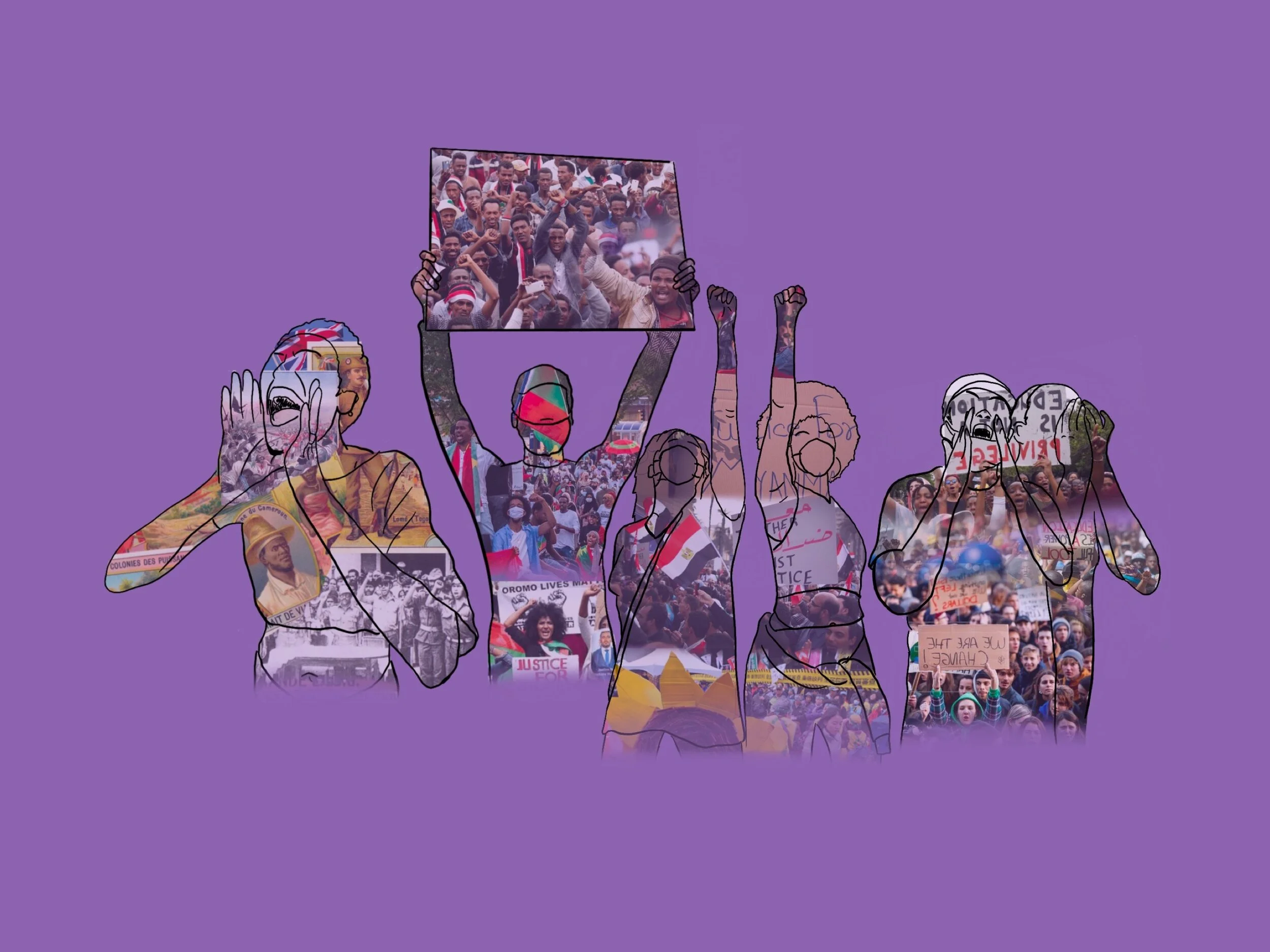
While initially peaceful demonstrations in Ethiopia quickly turned violent, the Oromo-Ethiopian diaspora participated in peaceful demonstrations using conventional civil disobedience tactics in their respective countries. Ethiopians in the US (particularly Minnesota), France and England, all came out in droves to protest Hundessa’s killing and existing human rights practices in Ethiopia. An example of the peaceful nature of these protests took place in Aurora, Colorado, where the substantial Oromo refugee community blocked traffic in a classic display of civil disobedience. [xiii]
Back in Ethiopia, Abiy Ahmed’s response to the unrest drew shocking parallels to tactics used by previous regimes. The state’s security forces employed extremely violent tactics, including firing live ammunition to dissuade protesters, leading to the deaths of 76 people. Reports about the behavior of the police found that “security forces employed disproportionate force in their attempt to restore order. . . and as a result, passersby, bystanders, young people, elderly people [stepped] in to mediate, and even police officers lost their lives from gunshot wounds despite having no participation in the unrest.”[xiv]This response was eerily similar to the previous government’s approach to the 2005 election protests, when similar levels of lethal force were also used against protesters.
In addition to the excessively violent tactics used by security forces, Ahmed also completely shut down Ethiopia’s internet for nearly the entire month of July,cutting Ethiopians off from news sources beyond Ethiopia’s state-controlled television channels.[xv] At the same time, Ahmed’s violent crackdown on the protests were marked by large-scale arrests, with as many as 10,000 people, including opposition leaders, being thrown in jail without charges.[xvi] In a matter of months, Ahmed went from receiving a Nobel Peace Prize to jailing political opponents and cutting off communications systems.
America’s Shadows
The action’s of Abiy Ahmed’s government represent a clear continuation of the illiberal policies of Ethiopia’s recent past. Internet shutdowns, mass arrests, and deadly crackdowns on demonstrators have all been staples of Ethiopian politics since 1991. However, the gunfire that has time and time again silenced ethnic minorities and political opposition parties throughout Ethiopia’s history is often met by silence from the west.
Despite its horrific human rights record, Ethiopia has not been subject to any UN sanctions, exception a brief arms embargo during its war with Eritrea. [xvii] Likewise, the US has never imposed sanctions on the country, settling instead for relatively soft public statements encouraging improvements in the country’s human rights practices.[xviii] In 2007, the House of Representatives passed the Ethiopia Democracy and Accountability Act, which sought to impose sanctions on Ethiopia over human rights abuses. However, this bill never made it to the Senate floor due to opposition from the Bush Administration.[xix]
The US and Ethiopia have enjoyed a particularly close relationship, especially since 9/11. US aid to Ethiopia has rapidly increased from a mere 150 million dollars in 2001 to over 1 billion in 2020.[xx] Given American concerns over Somalia’s role as a base of operation for groups like Al-Qaeda and Al-Shabaab, Ethiopia, a relatively secular and stable state, quickly became an American ally in the War on Terror. Ethiopia has been more than happy to assist in America’s posturing against Somalia, with whom they have engaged in sporadic conflicts since the 1940s– repeatedly occupying southern parts of the country through military force.[xxi] Ethiopia has thus been able to leverage the Global War on Terror and massive amounts of US aid to not only benefit its own geostrategic interests in combating pan-Somalism, but also to shield itself from repercussions for domestic human rights abuses.
Conclusion
Successful civil disobedience in Ethiopia faces many challenges, among them long-standing ethnic hostilities and practices of brutal repression ingrained in the doctrine of the political class. The unwillingness of the US to hold Ethiopian leaders accountable for their actions, whether it be through the UN or through the State Department, should not be included in this list. However, despite twenty years of civil disobedience movements both at home and abroad, egregious human rights violations, and fraudulent elections, Ethiopia's role in the War on Terror and its position as a facilitator in efforts to combat violent extremists across the border in Somalia have shielded the country from international pressure. As the Biden Administration takes office and seeks to shift national security policy away from the War on Terror, it should take care to consider how two decades of foreign policy guided by counterterrorism strategy have profoundly affected the US's relationships with illiberal regimes and the implications of those relationships for their citizens. Ethiopia is certainly worthy of reevaluation.
Illustration by Oscar Martinez
[i] “EU Election Observation Mission Ethiopia 2005: Final Report on the Legislative Elections” (EU Election Observation Mission, 2005), http://www.eods.eu/library/FR%20ETHIOPIA%202005_en.pdf.
[ii] “Ethiopian Protesters ‘Massacred,’” BBC, October 19, 2006, http://news.bbc.co.uk/2/hi/africa/6064638.stm.
[iii] “What Is behind Ethiopia’s Wave of Protests?,” BBC, August 22, 2016, https://www.bbc.com/news/world-africa-3694090
[iv] Chrispin Mwakideu, “Hundreds Killed since Start of Oromo Protests,” Deutsche Welle, December 11, 2016, https://www.dw.com/en/hundreds-killed-since-start-of-oromo-protests/a-3636983
[v] Paul Collier, “Ethiopia’s Path to Prosperity Is Opening up under Abiy Ahmed,” Financial Times, October 16, 2019, sec. Opinion, https://www.ft.com/content/502dc8f4-ef62-11e9-a55a-30afa498db1b.
[vi] “The Nobel Peace Prize 2019,” NobelPrize.org, accessed April 24, 2021, https://www.nobelprize.org/prizes/peace/2019/abiy/facts/.
[vii] “Ethiopia Must Release ONN Journalists and Opposition Politicians Immediately,” Amnesty International, April 7, 2020, https://www.amnesty.org/en/latest/news/2020/04/ethiopia-release-detained-journalists-and-opposition-politicians-immediately/; “New Wave of Journalist Arrests Could Roll Back Press Freedom Gains,” Amnesty International, July 9, 2019, https://www.amnesty.org/en/latest/news/2019/07/ethiopia-new-journalist-arrests-put-press-freedom-gains-at-risk/.
[viii] Paul Schemm, “After Years of Repression, Ethiopia’s Media Is Free — and Fanning the Flames of Ethnic Tension,” Washington Post, April 21, 2019, sec. World, https://www.washingtonpost.com/world/africa/after-years-of-repression-ethiopias-media-is-free--and-fanning-the-flames-of-ethnic-tension/2019/04/20/c4573f5a-5a4b-11e9-98d4-844088d135f2_story.html.
[ix] Muthoki Mumo, “In Era of Reform, Ethiopia Still Reverts to Old Tactics to Censor Press,” Committee to Protect Journalists, July 9, 2019, https://cpj.org/2019/07/ethiopia-coup-internet-censored-blocked-jailed-journalists/.
[x] “NEBE Officially Dissolves EPRDF, Gives Direction on Asset Division,” Ethiopia Monitor, February 5, 2020, https://ethiopianmonitor.com/2020/02/05/nebe-officially-dissolves-eprdf-gives-direction-on-asset-division/.
[xi] Kalkidan Yibeltal, “Ethiopia’s Abiy Ahmed Gets a New Ruling Party,” BBC, November 22, 2019, https://www.bbc.com/news/world-africa-50515636.
[xii] “Addis Ababa on the Aftermath of Assassination of Singer Haacaaluu,” Ethiopia Observer, July 3, 2020, https://www.ethiopiaobserver.com/2020/07/03/addis-ababa-on-the-aftermath-of-assassination-of-singer-haacaaluu/.
[xiii] Audra Streetman, “Demonstrators Block Traffic In Aurora To Protest Death Of Ethiopian Musician Hachalu Hundessa,” CBS Local, July 3, 2020, https://denver.cbslocal.com/2020/07/03/aurora-protest-death-ethiopian-hachalu-hundessa/.
[xiv] “News Analysis: 123 People Killed in June-July Unrest, 76 by Security Forces; Attacks Constitute Elements of Crime against Humanity: Ethiopia Rights Commission,” Addis Standard, January 1, 2021, https://addisstandard.com/news-analysis-123-people-killed-in-june-july-unrest-76-by-security-forces-attacks-constitute-elements-of-crime-against-humanity-ethiopia-rights-commission/.
[xv] “Internet Cut in Ethiopia amid Unrest Following Killing of Singer,” NetBlocks, June 30, 2020, https://netblocks.org/reports/internet-cut-in-ethiopia-amid-unrest-following-killing-of-singer-pA25Z28b.
[xvi] Abiy Ahmed, “More than 9,000 Arrests in Ethiopia since June Killing of Singer,” Al Jazeera, August 13, 2020, https://www.aljazeera.com/news/2020/8/13/more-than-9000-arrests-in-ethiopia-since-june-killing-of-singer.
[xvii] “UN Arms Embargo on Ethiopia and Eritrea | SIPRI,” SIPRI, accessed April 25, 2021, https://www.sipri.org/databases/embargoes/un_arms_embargoes/eritrea.
[xviii] “Several Dozen Fatally Shot in Weekend Protests across Ethiopia,” Washington Post, sec. World, accessed April 25, 2021, https://www.washingtonpost.com/world/several-dozen-fatally-shot-in-weekend-protests-across-ethiopia/2016/08/08/e03956d6-5d96-11e6-8e45-477372e89d78_story.html.
[xix] Bureau of Public Affairs Department Of State. The Office of Electronic Information, “Joint Press Availability with African Great Lakes State Leaders” (Department Of State. The Office of Electronic Information, Bureau of Public Affairs., December 5, 2007), https://2001-2009.state.gov/secretary/rm/2007/12/96505.htm.
[xx] “U.S. Foreign Aid by Country,” US AID, accessed April 25, 2021, https://explorer.usaid.gov//cd.
[xxi] Abdi Ismail Samatar, “Ethiopian Invasion of Somalia, US Warlordism & AU Shame,” Review of African Political Economy 34, no. 111 (2007): 155–65.